
Dressing a newborn in winter: indoors, outdoors, and in the car
Quick answer: In winter, it is best to dress a newborn in several light, easily adjustable layers. As a general everyday guideline, one extra layer outdoors compared to adults can be useful. However, the number of garments is not what matters, but checking the neck, chest, or tummy: warm and dry is just right, hot or sweaty means too much. In heated rooms and the car, the hat and additional warm layers should be removed.
Parents coming home with a winter baby often have the same doubt: Are a bodysuit, onesie, and jacket enough – or will the baby get cold? Newborns cannot regulate their body temperature as reliably as adults. At the same time, wrapping them up too warmly is not a good protection. A flexible layering system is therefore more helpful than a rigid list for every temperature.
This guide separates four situations that are often confused: a heated home, a stroller or baby carrier, a car seat in the car, and sleep. The tips apply to healthy, full-term babies. In the case of premature birth, illness, fever, or unusual behavior, the clothing should be coordinated with a midwife, pediatrician, or child doctor.
The quick winter overview
| Situation | Practical starting point | Important |
|---|---|---|
| Indoors | Bodysuit plus onesie or top and trousers, adjusted to the room temperature. | Remove the hat and outdoor layers. |
| Outdoors in the stroller | Several thin layers, warm outer layer, feet and head protected. | Check the neck regularly; do not cover the stroller airtight with a blanket. |
| In the car | Thin clothing under the harness system; add warmth only over it. | No thick winter jacket under the harness. |
| While sleeping | Suitable pajamas and a well-fitting baby sleeping bag. | No hat, no pillow, and no additional loose blanket. |
How can you tell if your baby is dressed correctly?
Hands and feet often feel cooler in babies and are not a reliable sign on their own that the child is cold. The British health authority NHS recommends feeling the chest, tummy, or neck. If the skin there is warm and dry, the clothing is usually just right. If it feels hot or sweaty, one layer should be removed.
The well-known rule "one layer more than the parents" can be a useful starting point during the day, but it is not a temperature formula. Wind, humidity, movement, strollers, baby carriers, and heated rooms change the heat requirements. Check your baby again after a few minutes, especially when switching from outdoors to indoors.
Key takeaway: Hands and feet do not decide, but the neck, chest, or tummy. Warm and dry is just right; hot and damp is too warm.
Dressing a newborn indoors in winter
In a normally heated home, a baby does not need a full outdoor outfit. A bodysuit and onesie or bodysuit, top, and trousers form a well-adjustable starting point. Thin cotton layers can be changed more easily than a single very thick garment. As soon as you enter a warm home, shop, bus, or car, the hat and additional outdoor layers should be removed.
Make sure the clothing fits comfortably, does not restrict movement, and does not bunch up at the neck. Size indications are only a guide: the actual child counts for the fit. The supplementary guide Choosing the right baby sizes explains how to recognize clothing that is too small or too large.
In the stroller: layers instead of heat buildup
For winter walks, several thin layers are suitable: a close-fitting base layer, a warming middle layer, and depending on the weather, a protective outer layer. The head and feet need special protection outdoors. If the baby lies in a well-insulated pram or footmuff, this environment already counts as an additional layer of warmth. That is why checking the neck remains more important than a blanketet statement about the number of layers.
Check after leaving and then regularly whether your baby is sweating. Blankets should not cover the stroller in such a way that air circulation is restricted. If you are still planning the first outing, the guide First walk with baby: When can you go out? is also helpful.
In the car seat: no thick jacket under the harness
A different rule applies in the car than in the stroller. The ADAC points out that thick, padded winter clothing prevents the harness system from fitting snugly against the body. Babies are therefore buckled in with thin clothing. Only after that can warmth be added over the closed harness, for example with a blanket, an open jacket, or a footmuff suitable for the specific car seat.
With accessories with harness openings, the instructions of the car seat manufacturer and the information of the accessory manufacturer must match. Harnesses must not be twisted and must fit snugly. As soon as the interior is warm, additional layers are opened or removed. A product name or a general compatibility statement never replaces the inspection of the specific car seat model.
While sleeping: less is safer than heat buildup
Stricter safety rules apply to sleep. The German Federal Institute for Public Health recommends sleeping on the back in the first year of life, a suitable sleeping bag, a firm mattress, and an empty bed without pillows, bumpers, or loose blankets. A hat does not belong in bed in a heated sleeping room. The face and head must remain free.
A winter sleeping bag is not automatically right for every home. The room temperature, clothing underneath, fit, and manufacturer specifications are decisive. The neckline must not be so wide that the baby can slip into it. Additional loose blankets do not belong over a sleeping bag. If the neck feels hot or damp, one layer is reduced.
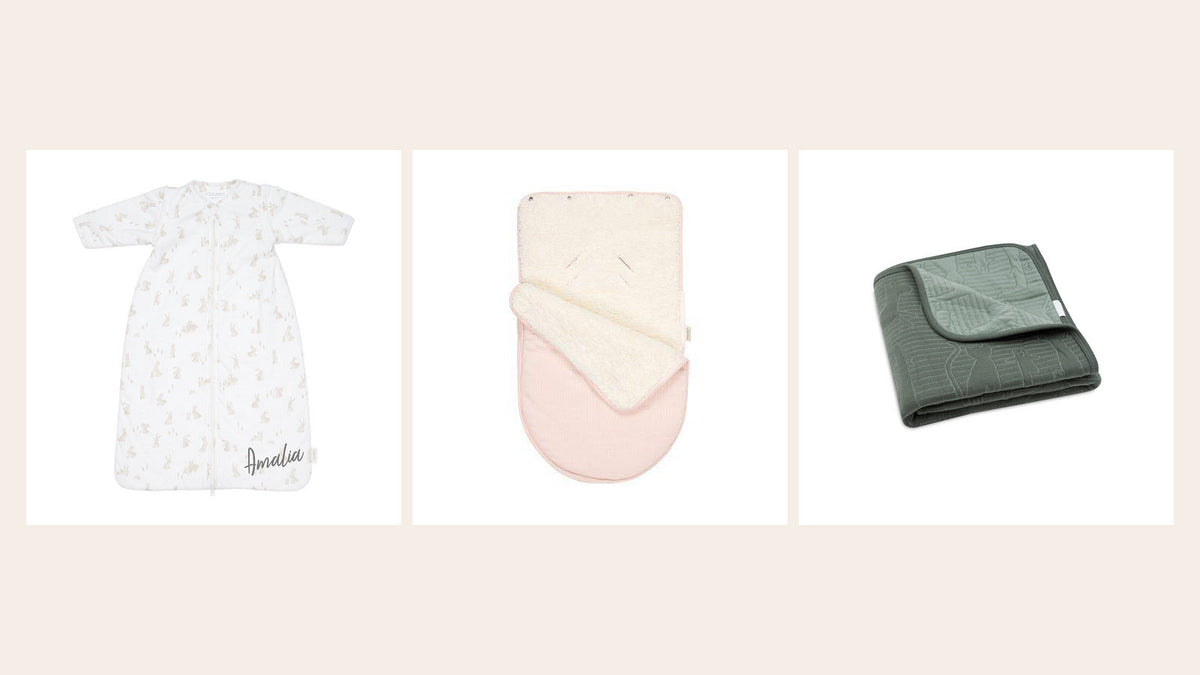
Five products for different winter situations
The following products complement different everyday situations. They are not a blanket clothing recommendation: Always check the size, room temperature, car seat, and care instructions on the specific product.


Discover practical gifts for birth
Typical winter mistakes
- Only checking cold hands: The neck, chest, or tummy are more meaningful.
- Leaving outdoor layers indoors: Remove the hat and additional layers in heated rooms.
- Thick jacket in the car seat: It creates distance between the harness and the body.
- Sleeping bag plus loose blanket: The additional blanket increases heat buildup and can get in front of the face.
- Completely covering the stroller: A blanket in front of the opening can unfavorably change air circulation and temperature.
- Ignoring manufacturer specifications: Sizes, warming performance, and compatibility differ from product to product.
When should professional advice be sought?
If a newborn seems unusually sleepy, drinks poorly, cannot be warmed up, breathes conspicuously fast, seems very hot, or you are generally worried, medical advice should be sought promptly. For babies under three months, a measured body temperature of 38 °C or higher is a reason for prompt medical clarification. Clothing does not replace a temperature measurement or a medical assessment.
Conclusion
A newborn does not need maximally thick clothing in winter, but adjustable layers and regular checks. Indoors, extras are removed, outdoors, warmth is flexibly added, in the car seat, the harness system remains close to the body, and while sleeping, the bed remains free. Who checks the neck, chest, or tummy and consciously designs transitions between cold and warm usually gets through everyday life more safely than with a rigid temperature table.
Frequently asked questions
How many layers does a newborn need in winter?
One layer more than adults is a possible starting point during the day, but not a fixed rule. Check the neck, chest, or tummy and adjust the clothing to the room, wind, stroller, or baby carrier.
Does a baby need a hat indoors?
In a normally heated home, the hat is usually removed. While sleeping, the head should remain free.
Are cold hands a sign that the baby is cold?
Not necessarily. Hands and feet can be cooler. The neck, chest, and tummy are more meaningful.
Can a baby go into the car seat with a winter jacket?
A thick padded jacket does not belong under the harness system. Dress thinly, buckle in correctly, and then add warmth over the harness.
Can a blanket go over the winter sleeping bag?
In the baby bed, no loose blanket should lie over the sleeping bag. Choose the sleeping bag and clothing underneath according to the room temperature and manufacturer specifications.
How do you check if a baby is too warm?
Feel the neck, chest, or tummy. Hot or sweaty skin speaks for removing one layer. Cool hands alone are not a reliable measure.
What applies to premature babies?
Premature babies may have special requirements for temperature and clothing. Here, the individual recommendations of the treating clinic, midwife, or pediatrician should be observed.
