






Mr. Tiger by Trixie
Compact pull toy with a handle opening, cotton cord, and water-based paints. With engraving or without personalization; manufacturer's recommendation from 18 months.
View Mr. Tiger
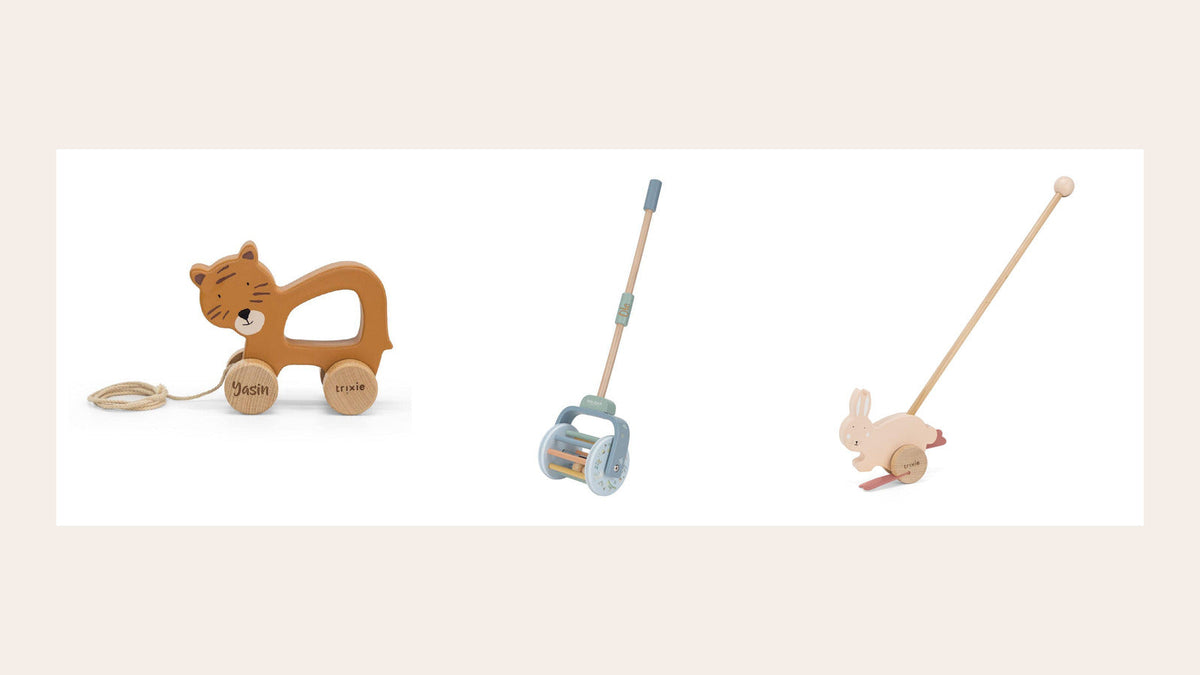
Direct answer: A pull toy is usually suitable for children who can already walk confidently and independently, turn around, and pull a cord behind them. A push toy is moved in front of the body with a long handle and is suitable for children who enjoy pushing forward and watching the toy react. However, it is not a walking aid and provides no support. Therefore, the design and color are not the only important factors, but above all the type of movement, age recommendation, space, noise level, and personalization.
| Criterion | Pull toy | Push toy |
|---|---|---|
| Movement | Rolls behind the child on a cord. | Is pushed in front of the child with a long handle. |
| Direction of view | The toy is mostly behind or to the side of the child. | The toy remains visible in front of the child. |
| Space required | Compact on the shelf; the cord needs some space when playing. | The long handle requires more storage space and clear walkways. |
| Play value | A companion to pull behind; many models can also be grabbed and rolled. | Moving feet, wings, or a rattle react directly to pushing. |
| Noise | Usually quieter, depending on the wheels and floor. | Depending on the model, it rolls quietly or makes a deliberate rattling sound. |
| Important | Regularly check the cord and wheels. | No substitute for a walker or supportive walking aid. |
A pull toy is the obvious choice if your child already walks confidently around the room and likes taking toys from one place to another. Compact models can also be grabbed by an opening and rolled directly on the floor. This is practical if the child alternates between pulling, carrying, and free rolling.
With a push toy, the figure remains in view. Moving feet or a rattle react to every push. This can be particularly interesting if your child likes visible or audible feedback. Plan a clear walkway for this: furniture edges, steps, and very tight turns can quickly stop the play.
Those who are sensitive to toy noises should look more closely at the wheels and additional functions. A push-handle rattle is deliberately audible. A simple pull toy without a rattle is usually quieter, although the actual sound always depends on the floor. Rubberized wheels can make rolling on smooth floors more pleasant.
An engraving makes the toy clearly a personal gift. Check the name before ordering, letter by letter. If the spelling is not yet certain or the gift is intended to be passed on, the version without personalization is more flexible. The guide Motor skills toys by age also offers more general selection help; there, the play idea is in the foreground, not the comparison between pulling and pushing.
Compact pull toy with a handle opening, cotton cord, and water-based paints. With engraving or without personalization; manufacturer's recommendation from 18 months.
View Mr. Tiger
Larger pull toy made of beech wood with a handle opening. A good choice if a blue animal motif and an optional name engraving are desired; recommended from 18 months.
View Mrs. Elephant
Particularly compact pull toy with a pink cat motif. It is available with engraving or without personalization and is recommended from 18 months.
View Mrs. Cat
Mint-colored model made of beech wood with a cord. It is suitable if a quiet color scheme and optional personalization are desired; recommended from 18 months.
View Mr. Polar Bear
The push model by Little Dutch combines a long handle, rubber wheels, and an audible rattle. With laser or without personalization; recommended from 18 months.
View Push Handle Rattle
The moving feet react when pushed. The model is a quiet visual alternative to a rattle and is available with engraving or without personalization; recommended from 18 months.
View Mrs. RabbitThe European Commission points out that toys on the EU market must bear a CE marking. Warnings and age recommendations should be observed before purchase. The current EU toy regulation also requires understandable warnings and safety information. Practically, this means: do not dispose of the packaging and instructions too quickly, read the manufacturer's specifications of the specific model, and regularly check the toy for loose parts, damaged wheels, cord, or handle.
Do not choose a model just because a child likes the motif. If the age recommendation is not yet met or the child cannot perform the movement safely, the gift can wait. Toys with damaged parts should not be reused.
Once the type of movement is decided, you can calmly compare motifs, colors, and personalization.
Discover pull and push toysThe age recommendation of the specific product is decisive. The pull toys compared here are recommended from 18 months. In addition, the child should already walk safely and be able to pull a cord behind them without holding onto it.
No. A push toy with a long handle is intended for pushing forward and provides no stable support. Anyone looking for a walker needs a different product category and should separately check the manufacturer's instructions.
A compact pull toy is usually easier to store. With the push toy, especially the long handle takes up additional space. A clear, flat path for playing is also crucial.
A simple pull toy without additional noise is often the quieter choice. A push-handle rattle deliberately creates sound. Wheels and flooring influence the actual volume.
For a first birthday gift or another occasion, an engraving can make the toy more personal. Without personalization, it remains more flexible if the name is not yet certain or the toy is intended to be passed on later.
Check the age recommendation, warnings, and condition. Remove all packaging material, check the cord, wheels, and connections, and briefly explain how the toy is used.
Pull toys and push toys are not interchangeable versions of the same toy. The pull toy accompanies the child from behind and is compact; the push toy remains visible in front of the child and reacts directly to every push. Those who clarify walking ability, space, noise, and personalization first will more easily find a model that really suits the family's everyday life.
